
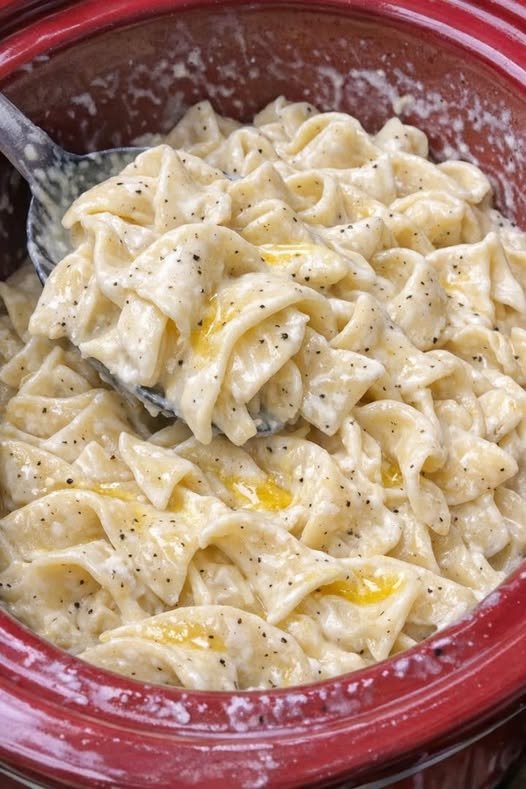
Full-fat sour cream is essential: Low-fat or nonfat varieties contain stabilizers and less fat, which can cause the sauce to split or turn grainy when heated.
Do not overcook: Egg noodles continue to soften in the residual heat. Check for tenderness at the 30-minute mark after the initial stir to avoid a mushy texture.
Gentle stirring only: Use a wide spoon and fold carefully. Vigorous mixing can break the wide noodles and release excess starch, making the sauce gluey.
Rest time thickens naturally: The 5-minute rest after adding sour cream allows the starches and dairy to emulsify, creating that signature silky coating.
Slow cooker variances: Some models run hotter than others. If your cooker tends to run high, reduce the final cook time by 5–10 minutes and check frequently.
Storage Tips
Refrigerator: Store cooled leftovers in an airtight container for up to 3 days. The noodles will continue to absorb moisture, so expect a thicker consistency when reheating.
Freezer: Not recommended. Sour cream and egg noodles tend to separate and become watery or grainy when frozen and thawed.
Reheating: Warm gently on the stovetop over low heat, adding 2–3 tablespoons of chicken broth or milk to restore creaminess. Microwave in 30-second intervals, stirring well between each.
Make-ahead strategy: This dish is best prepared fresh. If prepping components ahead, measure noodles and broth the night before, but add the sour cream only after cooking to preserve texture.
Avoid repeated reheating: Reheat only the portion you plan to eat to maintain flavor, consistency, and food safety.
Frequently Asked Questions
Q: Can I use low-fat sour cream to make this lighter?
A: It is not recommended. The reduced fat content and added stabilizers will likely cause the sauce to curdle or separate when heated. For a slightly lighter option, blend 1 cup full-fat sour cream with 1 cup plain Greek yogurt.
Q: Why did my noodles turn gummy or sticky?
A: This usually happens from overcooking, insufficient initial liquid, or vigorous stirring that releases excess starch. Stick to the recommended times, stir gently, and ensure noodles are mostly submerged at the start.
Q: Can I add meat or vegetables directly to the slow cooker?
A: Yes, but cook meats fully before adding. Delicate vegetables like peas or spinach can be stirred in during the final 5 minutes. Hearty vegetables like carrots or celery should be added with the broth to ensure they soften properly.
Q: Can I use a different type of pasta?
A: Wide egg noodles are ideal because their starch content creates the creamy coating. Other shapes like rotini or penne will work but may require adjusted liquid and cook times, and the texture will differ.
Q: Is this recipe naturally gluten-free?
A: No, traditional egg noodles contain wheat. For a gluten-free version, use certified GF egg-style noodles or rice-based wide noodles, and verify your broth and sour cream are gluten-free.
Allergy Information
Contains: Gluten (egg noodles), dairy (butter, sour cream), egg (noodles)
May contain: Soy or wheat derivatives depending on broth or noodle brand
Substitutions:
Gluten-free: Use certified GF wide noodles and verify all packaged ingredients
Dairy-free: Replace butter with plant-based butter and sour cream with full-fat coconut cream or unsweetened cashew cream (note: flavor and texture will shift)
Lower sodium: Use low-sodium broth, omit added salt until tasting, and season gradually
Always verify packaging for allergen statements, as formulations vary by manufacturer and region.
Slow Cooker Creamy Butter & Sour Cream Egg Noodles is a quiet reminder that some of the most enduring recipes require nothing more than a few honest ingredients and the patience to let them transform. It does not demand technique, exotic flavors, or hours of attention. It only asks for a slow cooker, a gentle stir, and the willingness to trust the process.
Make it when the week feels heavy, when you need a reliable dish to share with loved ones, or when you simply crave the kind of comfort that tastes like memory. If you try this recipe, I would love to hear how you serve it. Did you pair it with roasted chicken? Stir in fresh herbs? Share your kitchen story, and if you know someone who still treasures the quiet simplicity of old-fashioned cooking, pass this along.
Because sometimes, the most deeply satisfying meals are not about doing more. They are about letting butter, broth, and time do exactly what they were meant to do.
