
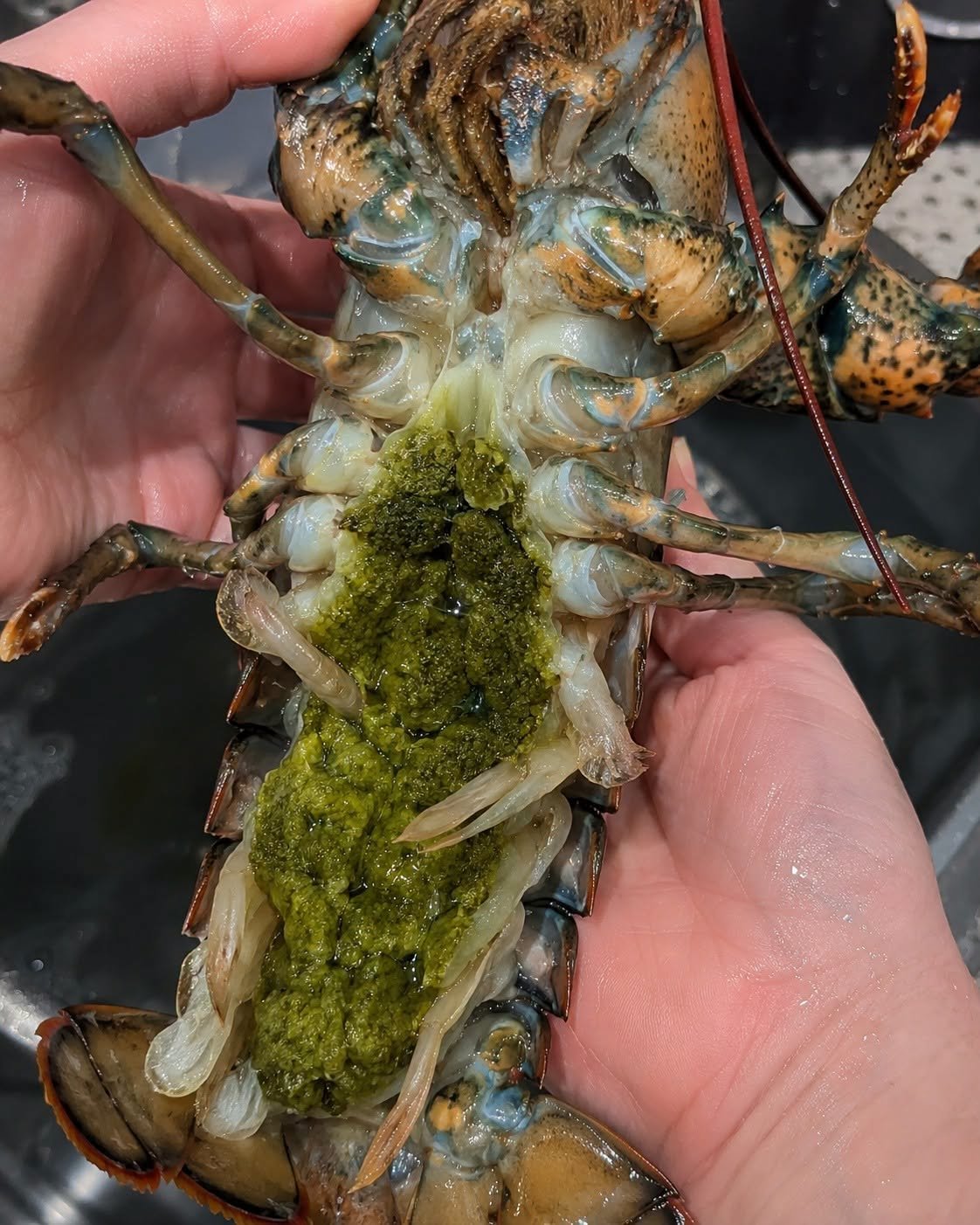
While lobster tomalley is generally safe to eat and highly nutritious, there is an important caveat: it must be consumed in moderation.
Because the hepatopancreas acts as the lobster’s filtration system, it can accumulate environmental contaminants from the ocean, including heavy metals and toxins. For the average person, enjoying the tomalley from a few lobsters a year poses no significant health risk. However, health experts advise against eating it in large quantities. As a precaution, pregnant women, nursing mothers, and young children are often advised to skip the tomalley entirely to avoid any potential exposure to accumulated toxins.
Frequently Asked Questions
What is lobster tomalley?
It is the lobster’s hepatopancreas, which functions as its liver and pancreas.
Is it safe to eat?
Yes, it is generally safe for most adults to eat, provided it is consumed in moderation due to the potential for environmental toxin accumulation.
What does it taste like?
It has a highly concentrated, rich, and briny lobster flavor with a smooth, creamy, paste-like texture.
Can I eat lobster roe?
Yes, lobster roe (the eggs) is also a highly prized delicacy. It has a granular texture and a slightly sweeter flavor than the tomalley.
What is the green stuff in my lobster?
Depending on the texture and the sex of the lobster, it is either the pasty tomalley (digestive organ) or the granular roe (eggs). Both are edible and delicious.
A Final Thought
When I sit down to eat lobster today, I always look forward to finding the green stuff. What I once mistook for a culinary mistake has become my absolute favorite part of the meal. The next time you crack open a lobster and spot that vibrant green gold, don’t scrape it away. Embrace it, taste it, and discover the rich, briny delicacy that so many seafood lovers already know and cherish.
