
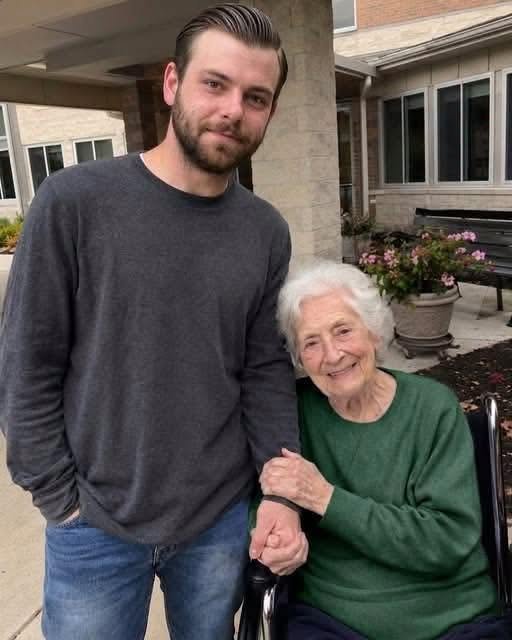
The Phone Call
On a gray Tuesday in November, my phone rang. It was the nursing home.
“I’m sorry to inform you,” the voice said gently, “that Eleanor passed away this morning. It was peaceful. She went in her sleep.”
I didn’t cry then. I thanked the nurse and hung up. I cried later, alone in my apartment, clutching a mug of cold coffee and staring blankly at the wall. She was not my mother. I was not her son. But I loved her. And I believe, in her own way, she loved me too.
Three days later, the nursing home called again. “Eleanor left something for you,” the social worker said. “Could you come by to collect it?”
The Box
It was a small wooden box, worn smooth by time, with Eleanor’s name carved on the top in elegant script. The social worker handed it to me without explanation.
“She asked that it be given to her son, Michael,” she said. “But she changed her will six months ago. She wanted you to have it instead.”
I opened the box in my car, my hands trembling. Inside were letters. Dozens of them, tied with a faded ribbon. Letters addressed to Michael, dated over the past twenty years. Letters he never received. Letters he never answered.
The top one was written just last month:
My dearest Michael,
I know you’re not my son. I’ve known for a while now. The dementia lifts sometimes, and in those moments, I see clearly.
But I also see that you are kind. You are patient. You are here when no one else is.
I don’t know your real name. I don’t know your story. But I know that you have given me more comfort in these eighteen months than my own son has given me in eighteen years.
So I’m leaving you what little I have. Not money—I have none. But I have this box. I have these letters. I have my love.
Thank you for pretending to be my son.
Thank you for being so much more.
With all my love,
Eleanor
I read the letter three times. Then I placed it back in the box and drove home.
